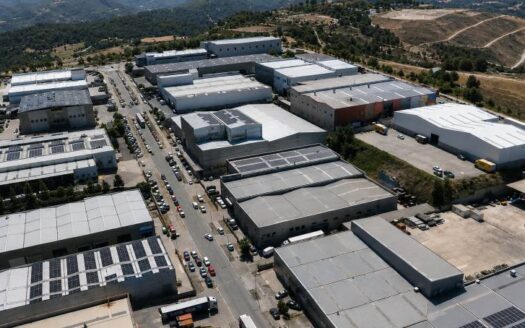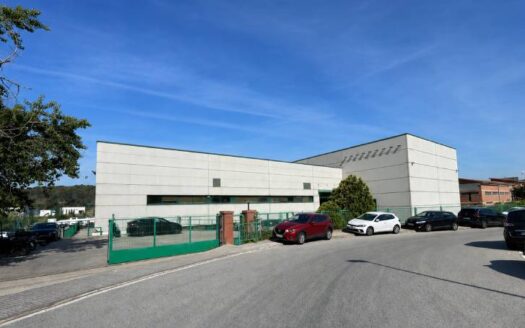

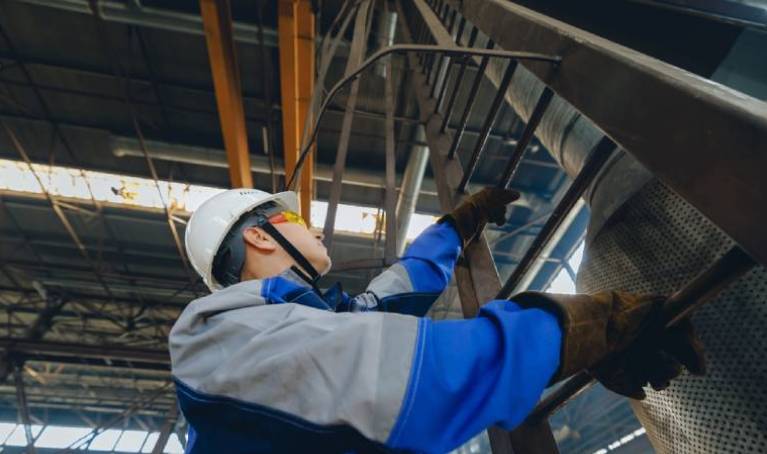
The industrial property market in Catalonia encompasses a highly diverse stock, much of which is now several years old. As a result, many businesses find a warehouse in the right location, with the floor space they need and at a price that works — but the condition of the property does not fully suit the activity they wish to carry out there. In such cases, refurbishment is not an option; it is a necessity.
The problem is that, all too often, time is pressing, businesses rush into refurbishment, and what should have been a planned adaptation ends up becoming a problem of costs, timescales, and penalties. An old warehouse can hide structural surprises, outdated installations, and regulatory requirements that were not taken into account at the time the contract was signed.
So what are the most common mistakes when refurbishing an industrial warehouse, and — more importantly — how can they be avoided?
1. Starting works without validating the necessary licences
This is perhaps the most costly mistake and, paradoxically, one of the most common. Many owners begin works assuming that simple administrative procedures will suffice, only to find themselves facing fines, work stoppages, or even demolition orders.
Refurbishing an industrial unit may require a minor works licence, a major works licence (if the structure, roof, or layout is affected), and an activity licence (mandatory if the use is changed or a new activity is commenced). Licences are not a mere formality: they establish a parallel timeline to the works themselves, and one that must be factored in from day one.
How to avoid it: Carry out a legal and technical assessment of the warehouse before purchasing, leasing, or beginning any refurbishment. Consult a specialist and confirm the permit requirements with the relevant local authority before engaging any building contractor.
2. Underestimating the budget and failing to allow for contingencies
One of the most frequent budgeting errors is calculating the cost of a refurbishment solely on the basis of visible construction items, overlooking everything that surrounds the project: licence fees, technical surveys, professional fees, utility connections, installation compliance costs, or increases in the price of materials.
Material and labour costs have risen steadily in recent years, meaning that a fixed budget with no contingency allowance is a guaranteed source of tension and overruns.
How to avoid it: Break the budget down by category (structure, operations, installations, fire safety) and always include a contingency of between 10 and 15 % of the total. Do not confuse “cost optimisation” with “indiscriminate budget cutting”: in industrial warehouses, poorly calculated savings tend to come back in the form of premature maintenance, production downtime, or difficulties in obtaining the activity licence.
3. Failing to inspect the existing structure before starting work
Many industrial refurbishments involve changes to the layout, the introduction of heavy machinery, the installation of mezzanine floors, or modifications to the roof. Proceeding without a prior assessment of the structural condition of the warehouse can be both dangerous and extremely costly.
Hidden problems such as deteriorated columns, inadequate foundations, leaking roofs, or cracked floors can multiply the cost of the refurbishment if they are discovered once work has already begun.
How to avoid it: Commission a prior structural survey from a specialist engineer or architect. This is a relatively modest outlay that can prevent far greater surprises. In older or prefabricated warehouses, it is particularly important to inspect the joints between structural elements and the condition of the materials.
4. Overlooking fire safety regulations
Fire safety regulations are the principal technical constraint when refurbishing an industrial unit. The Regulation on Fire Safety in Industrial Premises (RSCIEI) sets out highly specific requirements based on the activity, the floor area, and the intrinsic risk of the establishment: fire compartments, evacuation distances, hydrants, sprinklers, detection systems, emergency signage, and so on.
Carrying out a refurbishment without taking these requirements into account can make it impossible to obtain an activity licence, or may require already completed work to be redone.
How to avoid it: Incorporate fire protection regulations (RIPCI) from the design stage, not as an afterthought. A competent technical specialist must validate the compartmentalisation and suppression systems at the outset of the project.
5. Planning the refurbishment without thinking ahead
Another common mistake is designing the refurbishment exclusively for current needs, without accounting for the future growth of the business. A warehouse that seems adequate today may prove too small within a few years if the company expands, introduces new machinery, or changes its operations.
Refurbishing without a forward-looking perspective often means having to refurbish again within a short period, with twice the cost and twice the disruption.
How to avoid it: Before starting any work, analyse the business growth projections over a 5- and 10-year horizon. Design the layout with flexibility in mind: reserved space, electrical installations sized for future expansion, and floors suitable for heavy machinery. Investment in flexibility always pays off.
6. Choosing the building contractor on price alone
In an industrial refurbishment, price is a relevant criterion, but not the only one. Opting for the cheapest quote without considering the contractor’s experience, the guarantees on offer, their project management capability, and their knowledge of industrial regulations can lead to serious problems: poor workmanship, delays, unsuitable materials, or difficulties at final inspections.
How to avoid it: Request at least three detailed, comparable quotes. Verify that the building contractor has proven experience in industrial refurbishments and that the project includes ongoing technical supervision. A low price that brings with it unforeseen extras, scope changes, or defective work can ultimately prove the most expensive option.
7. Neglecting electrical and utility installations
Electrical installations in an industrial unit must comply with the Low Voltage Electrotechnical Regulations (REBT) and, in many cases, require formal registration with the relevant authority (in Catalonia, the Catalan Energy Agency and the Territorial Services for Business and Employment). Incorrectly sizing the electrical installation for the planned machinery, or failing to plan for utility connections (water, gas, compressed air, drainage), leads to operational problems immediately or shortly after the activity commences.
How to avoid it: Carry out a thorough assessment of the energy and utility requirements of the operation. Work closely with the electrical contractor and the project engineer from the design stage to ensure that all installations are correctly sized and properly registered.
A well-executed refurbishment is an investment, not an expense
Refurbishing an industrial warehouse carries risks, but also opportunities. When done properly — with adequate planning, the right professionals, and a clear understanding of the regulations — a refurbishment can transform an outdated facility into a competitive, efficient space ready for growth.
At Masachs, we accompany our clients through every stage of the process: from finding the right warehouse to advising on refurbishment possibilities, legal conditions, and available market options. If you are considering refurbishing an industrial space, or are looking for a warehouse that already meets your needs, please do get in touch.